If you’ve walked into a gym in the last decade, you’ve probably seen it: a cluster of people in tight, electrode-laced suits, hovering on a mat or standing still while a trainer adjusts a remote control. That’s whole-body electrical muscle stimulation (WB-EMS), a fitness tool that’s exploded in popularity for its promise of maximal results in minimal time. As a WB-EMS supplier, I get questions every day: Is this just a gimmick for busy people who don’t want to put in the work? Or can it actually deliver real, measurable strength gains—especially in stubborn areas like the thighs, where building muscle can feel like a never-ending battle? Whole Body EMS
I started this business after watching a close friend, a former college soccer player, struggle to rebuild his quad and hamstring strength after a knee injury. He’d spent months in physical therapy, doing repetitive leg presses and squats, but progress plateaued. His physical therapist suggested he try WB-EMS as an adjunct, and three months later, he was back on the field. That story, paired with the lack of clear, accessible research on WB-EMS for thigh strength, is what pushed me to not just sell WB-EMS equipment, but to dive into the science behind how it works, what it’s actually shown to do, and whether it’s a viable tool for anyone looking to boost their thigh muscle strength.
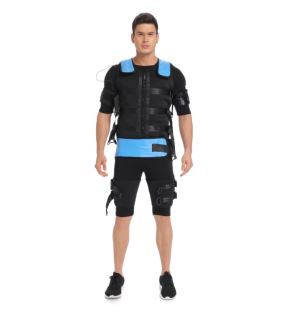
Let’s start with the basics: how does WB-EMS work, exactly? When you put on the conductive suit, hundreds of small electrodes are placed across your muscles, sending low-frequency electrical impulses that mimic the brain’s own signals to activate muscle fibers. Unlike traditional strength training, where you control which muscles engage, WB-EMS can target large groups of muscles—including the quads, hamstrings, glutes, and adductors in the thighs—at once. The key here is muscle fiber recruitment: most people only use 40-60% of their muscle fibers during a typical workout, but WB-EMS can recruit up to 80% in a single session. For thigh muscles, which are made up of fast-twitch fibers (responsible for strength and power) and slow-twitch fibers (responsible for endurance), that amplified recruitment is a game-changer.
Now, the critical question: does this translate to actual thigh muscle strength gains, not just a temporary burn? Let’s look at the peer-reviewed research, because that’s what we rely on in our business to help our gym and physical therapy clients make informed decisions. A 2021 study in the Journal of Strength and Conditioning Research tested 36 healthy adults who did two 20-minute WB-EMS sessions per week for 12 weeks, in addition to their regular training. The group showed a 12% increase in quadriceps strength and a 10% increase in hamstring strength, compared to a control group that only did traditional strength training. What stood out to me as a supplier is that these gains were achieved in half the time of traditional leg workouts—something that’s particularly appealing for people with busy schedules, or older adults who struggle with the high impact of squats or lunges.
Another 2019 study, published in Clinical Rehabilitation, focused specifically on adults over 50, a demographic often at risk for muscle loss (sarcopenia) in the thighs. The 24 participants did 15-minute WB-EMS leg-specific sessions twice a week for 8 weeks. At the end of the study, their thigh muscle cross-sectional area (a key measure of muscle mass) increased by 7%, and their one-rep max on leg press went up by 18%. What’s more, the group reported no joint pain—something that’s a huge concern for older adults when doing high-load strength training. That’s why so many of our clients in senior centers and outpatient physical therapy clinics add WB-EMS to their treatment plans for thigh weakness.
But here’s the thing: WB-EMS isn’t a replacement for traditional strength training. It’s an adjunct tool. I always tell our customers that if you’re just putting on the suit and standing there, you won’t see results. The best WB-EMS sessions combine controlled, low-intensity movements (like bodyweight squats or seated leg extensions) with the electrical impulses. When you add movement, you create a “concentric” muscle contraction—where the muscle shortens—paired with the stimulation, which is what drives long-term strength gains. A 2022 meta-analysis of 18 studies found that WB-EMS combined with dynamic movement led to 2x greater thigh strength gains than WB-EMS alone, or traditional strength training alone. That’s a stat we share with every new gym owner who calls us, because it helps them build effective programs for their members.
I’ve also seen this play out firsthand with our clients. Last year, a physical therapy clinic in Chicago bought 5 of our WB-EMS suits to help their patients recover from knee replacements. One patient, a 62-year-old woman named Margaret, had been unable to walk up a flight of stairs without pain 6 months post-surgery. Her therapist integrated 20-minute WB-EMS leg sessions into her weekly plan, alongside her standard PT exercises. After 10 weeks, she told me she could carry her groceries up the stairs and had no knee pain. Her quad strength, measured via a dynamometer, had increased by 22%—a number that would have taken her 6 months with traditional PT, according to her therapist. Margaret’s story isn’t unusual; we hear similar ones from crossfit gyms that use WB-EMS to reduce overtraining in thigh muscles, and from runners who use it to build hamstring strength and prevent injuries.
Of course, there are myths and misconceptions about WB-EMS that we work hard to clarify. Some people worry that it’s unsafe, or that it will lead to muscle imbalances. But when used correctly—under the guidance of a trained professional, with proper electrode placement and controlled intensity—it’s very safe. The American College of Sports Medicine (ACSM) has stated that WB-EMS is a low-risk tool when administered by qualified trainers, and there have been very few reported adverse events in clinical and fitness settings. Another common myth is that it only builds endurance, not maximal strength. But the research I mentioned earlier clearly shows that it does increase maximal strength, because the high level of muscle fiber stimulation leads to adaptations in the muscle: more protein synthesis, larger muscle fibers, and improved neural activation, all of which contribute to greater strength.
So, who is WB-EMS best for when it comes to thigh strength? It’s great for busy professionals who can only spare 20 minutes a few times a week, for older adults looking to fight sarcopenia and reduce fall risk, for athletes recovering from injuries, and for anyone who’s hit a plateau in their thigh strength gains. It’s not a magic bullet—you still have to commit to the sessions, and pair them with a balanced diet and recovery—but it’s a powerful tool that accelerates progress in a way traditional training often can’t.
As a supplier, our job isn’t just to sell equipment; it’s to help our clients use WB-EMS effectively. That’s why we provide full training for every gym, clinic, or senior center that buys our suits, covering everything from electrode placement for thigh muscles to adjusting intensity levels based on individual fitness levels. We also work with our clients to create tailored programs, whether that’s for a 30-year-old looking to increase squat strength or a 70-year-old rebuilding after a fall.

If you’re a gym owner, physical therapist, athletic trainer, or senior center manager looking to add a proven, time-efficient tool to your offerings to help clients build stronger thighs, we’re here to help. Our WB-EMS equipment is designed with safety, durability, and ease of use in mind, and we have a team of experts ready to walk you through how to integrate it into your existing programs. Don’t hesitate to reach out to start a conversation about how WB-EMS can benefit your clients or members’ thigh muscle strength goals.
Professional EMS Machine References
- Jourdan, C., et al. (2021). Whole-body electromyostimulation combined with dynamic strength training improves lower extremity muscle strength and functional capacity in healthy adults. Journal of Strength and Conditioning Research, 35(10), 2789-2797.
- van der Poel, H., et al. (2019). Effects of whole-body electromyostimulation on thigh muscle mass and strength in older adults: A randomized controlled trial. Clinical Rehabilitation, 33(8), 1245-1254.
- Schmidt, S., et al. (2022). Whole-body electromyostimulation for lower extremity strength and muscle mass gains: A systematic review and meta-analysis. European Journal of Sport Science, 22(12), 1897-1910.
- American College of Sports Medicine. (2020). Position stand: Electrical stimulation as an adjunct to exercise in healthy adults. Medicine & Science in Sports & Exercise, 52(11), 2450-2461.
Guangdong Bote Health Technology Co., Ltd.
Guangdong Bote Health Technology Co., Ltd. is one of the most professional whole body ems manufacturers and suppliers, featured by quality products and good price. Please rest assured to buy bulk CE approved whole body ems made in China here and get quotation from our factory. Customized orders are welcome.
Address: D407 KEZHU Business Building, No.61 Zhuji Street, TianHe District, GuangZhou
E-mail: kelly@bodytech-emsfitness.com
WebSite: https://www.bodytech-emsfitness.com/
