If you’re working in bulk material handling, chances are you’ve hauled or shipped something in a FIBC bag before. These big, flexible containers—aka bulk bags—are total workhorses for everything from food-grade grains and chemicals to construction aggregates and recycled plastics. But here’s the thing: a FIBC bag that’s not labeled right is basically a paperweight with sharp edges. I’ve been supplying these bags for over 8 years, and I can’t tell you how many times a client sent me a panicked email because a shipment got turned back at the port, or their warehouse rejected a load because the labeling was off. So today, let’s cut through the confusion and walk through exactly how to label FIBC bags the right way—no stuffy industry jargon, just real tips I’ve learned from fixing mistakes with clients over the years. FIBC Bag
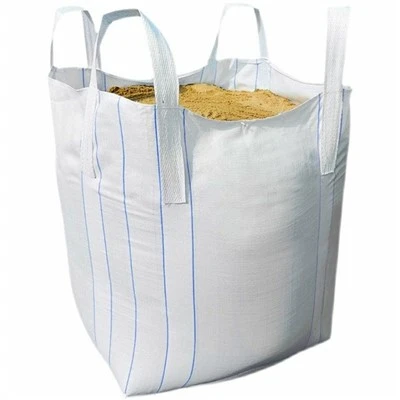
First off, let’s talk about why labeling FIBC bags isn’t just a “check-the-box” task. I had a guy reach out to me last year who lost $12k in a single shipment of rice. The port inspector in Singapore flagged his bags because they were missing the food-grade certification mark, and since rice is a consumable, they couldn’t clear customs. He’d printed a generic label he found online and called it a day. Oops. FIBC labels do three non-negotiable things: they keep your workers safe, they make sure your cargo arrives where it needs to go, and they help you avoid losing money (hello, that $12k lesson).
Let’s start with the absolute basics: what you need to include, no matter what you’re shipping. I break this down into four categories, and I always make sure my own bag suppliers hit every single one—if they don’t, I flag it before it even leaves my warehouse.
-
Product & Batch ID
This is the most obvious one, but you’d be surprised how many people skip a clear batch number. For example, if you’re shipping 50 FIBC bags of plastic pellets to a factory in Ohio, you don’t want them mixing your October 1 load of virgin pellets with your November 1 load of recycled ones. That batch number—something simple like “PE-VIR-2024-10-05”—goes on every single bag, and it should also link to your COA (Certificate of Analysis) so if there’s a problem, you can trace it back fast. I always tell clients to put this number in big, bold font—at least 12pt, but 16pt is better—on the front of the bag. No tiny, hard-to-read text here. -
Weight Specs
This is non-negotiable for safety, full stop. FIBC bags are rated for a specific working load limit (WLL)—that’s the max weight you can put in them, minus the weight of the bag itself. If you overfill a FIBC, it can split open mid-shipment, or even collapse when you lift it with a forklift. On the label, you need two numbers: gross weight (full bag, including cargo and bag) and net weight (just the cargo). For example, if a bag holds 1,000 lbs of corn and the bag itself is 25 lbs, gross weight is 1,025 lbs, net is 1,000 lbs. I always recommend adding the WLL too, just to be extra clear—some warehouse workers don’t know what net weight means. -
Handling Instructions
This is where most labels fail. FIBC bags aren’t one-size-fits-all for handling. If you’re shipping conductive FIBC for flammable chemicals, workers need to know they can’t use a magnetic forklift hook—static electricity could cause an explosion. If it’s a food-grade bag, workers need to know not to drag the bag on the ground (it could pick up dirt or cross-contaminate). I use simple icons alongside text here, because not everyone reads English super well, and icons are universal. A forklift icon means “lift with forks, not hooks”; a snowflake icon means “keep frozen”; a glove icon means “food-grade, no direct contact with bare hands.” I never skip these icons—they save so much confusion. -
Regulatory & Certification Marks
This is the make-or-break part, especially if you’re shipping internationally. Different countries have different rules, and if you miss a mark, your shipment gets held. For example, if you’re shipping to the EU, you need the CE mark, and if it’s food-grade, you need the FDA mark (yes, even if it’s coming from a non-US country—EU requires FDA for food contact materials). For hazardous materials, you need the UN mark, which proves the bag meets UN standards for dangerous goods. I always tell clients to confirm the exact regulatory marks with their importer before printing labels—don’t guess. That Singapore rice shipment guy? He forgot the FDA mark, and that’s why his shipment got turned back.
Now, let’s talk about the physical label itself—you can have the perfect content, but if the label falls off the bag mid-transit, it’s useless. I see this all the time: clients print labels on regular paper and tape them on, and by the time the bag crosses the country, the tape has come loose and the paper is wet or torn. Don’t do that. Here’s what I recommend for label materials, based on what’s inside the bag:
- If it’s dry, non-hazardous stuff (grains, pellets, sand): Use a polypropylene (PP) label. It’s flexible, waterproof, and doesn’t tear when the bag rubs against other bags in a truck. I use heat-seal PP labels for my own FIBC bags—they get fused right to the outer layer of the bag, so there’s no tape, no chance of it falling off.
- If it’s wet or might get exposed to moisture (fertilizer, recycled paper): Go for a vinyl or polyester label. These are even more durable than PP, and they won’t smudge if it rains or the bag gets sprayed with water.
- If it’s hazardous material: Skip the adhesive labels entirely. Use a metal plate that’s riveted to the bag, so it stays on even if the bag is dropped or crushed. I had a client ship lithium-ion battery parts once—those metal plates saved them when one bag got crushed by a forklift; the label was still legible, so no one had to guess what was inside.
Next, placement of the label. This is another thing people mess up. If you put the label on the bottom of the bag, when it’s stacked on a pallet, you can’t see it. I always recommend two labels per bag: one on the front (the side that faces outward when stacked) and one on the top. That way, even if the bottom label gets hidden, the top one is visible. Also, make sure the label is at least 6 inches away from any sewing on the bag—sewing can pull at the label and make it tear. I learned that the hard way: early on, I placed a label too close to the seam on a batch of bags, and 10% of the labels ripped off during shipping. Now I have a rule: no labels within 2 inches of any seam or strap.
Wait, what about special cases? Because not all FIBC bags are for generic cargo. Let’s cover the ones I get asked about most.
First, food-grade FIBC bags. These have extra rules. The label needs to say “food contact safe” (or the FDA mark, depending on where you’re shipping), and you have to include the name of the material the bag is made from—usually PP, but some are made with other plastics that aren’t food-safe. I also always add a “do not reuse” mark on food-grade bags, because reusing a food-grade bag for non-food stuff can contaminate future food shipments. That’s a big one—one client reused a wheat bag for pet food, and the pet food company rejected a whole 10-train shipment because of cross-contamination. The label didn’t say “do not reuse” and they got burned.
Second, conductive FIBC bags for flammable materials (like gunpowder, paint thinners, or lithium battery components). These have to be labeled as “static-dissipative” or “conductive,” and you need to add a warning about not using magnetic hooks. I also include a “test date” mark—conductive FIBC bags lose their static-dissipative properties over time, so you need to test them every 12 months. The label should have the last test date, so workers know if the bag is still safe to use.
Third, recycled material FIBC bags. A lot of clients ship recycled plastic or metal, and they need to label the material type clearly. For example, if it’s recycled PET, put “r-PET” on the label, not just “recycled plastic.” This helps the recycling plant sort it correctly, and they’ll pay you more too—they don’t have to guess what’s inside. I had a client switch from generic “recycled plastic” labels to specific ones, and their payment went up 15% because the plant could process it faster. That’s a win-win.
Now, common mistakes I see all the time that you can avoid. Let’s list them out so you don’t have to learn the hard way:
- Tiny text. I know you might want to fit a lot of info on the label, but if the font is smaller than 10pt, no one can read it from 3 feet away. I make all my FIBC labels 12pt minimum, and key info (batch number, net weight) is 16pt.
- Using generic labels. Don’t print a “one-size-fits-all” label for every bag. If you’re shipping hazardous material, don’t use the same label you use for sand. It can lead to dangerous mix-ups.
- Forgetting to update labels for new shipments. If you re-batch a shipment of corn that you originally labeled for a different customer, make sure you update the batch number and destination. I once caught a client doing this—they were shipping to a farm in Iowa but forgot to change the destination on the label, so a truck driver almost dropped the load at a farm in Illinois.
- Not checking label compliance for the destination country. I can’t stress this enough. If you’re shipping to Canada, they require the Canadian Food Inspection Agency (CFIA) mark for food products; if you’re shipping to Australia, they require the Australian Dangerous Goods (ADG) mark. I always tell clients to send me the destination country and product type before I ship bags, so I can make sure the labels have all the right marks.
A quick pro tip from my side: I include a spare label in every FIBC bag shipment I send. It’s a small thing, but if a label gets torn or lost, the client has a backup. I’ve had so many clients tell me that spare label saved them from a shipment delay or rejected load. It’s like giving a spare key—super useful, and it doesn’t cost me much extra.
Now, let’s wrap this up with what matters most: at the end of the day, labeling FIBC bags is about safety, efficiency, and not losing money. If you get it right, your shipments clear customs fast, workers stay safe, and your customers are happy. If you get it wrong, you’re looking at delays, fines, or even accidents.
If you’re not sure what kind of labels you need for your specific cargo, or you want to order FIBC bags with pre-applied, correctly labeled tags, just reach out to me. I’ve worked with hundreds of clients across industries, from small farms to big chemical companies, and I can help you figure out exactly what works for your needs. No pressure, no confusing sales talk—just straight-up advice.

Before I go, quick reminder to check your labels every time you send a shipment. I always do a quick 2-second check before every load leaves my warehouse: is the batch number clear? Are the weight specs right? Are the regulatory marks there? That little check has saved me countless headaches over the years.
Bulk Bag References:
- Bulk Bag Manufacturers Association (BBMA). (2023). Best Practices for FIBC Labeling and Traceability. Retrieved from industry standard guidelines for bulk packaging.
- Occupational Safety and Health Administration (OSHA). (2022). Safety Requirements for Bulk Material Handling with Flexible Intermediate Bulk Containers. Retrieved from OSHA’s bulk equipment safety resources.
- U.S. Food and Drug Administration (FDA). (2021). Guidance for Industry: Food Contact Substances, Including Flexible Bulk Packaging. Retrieved from FDA’s food packaging regulations.
- United Nations Committee of Experts on the Transport of Dangerous Goods. (2022). Model Regulations on the Transport of Dangerous Goods, Volume 1. Retrieved from UN dangerous goods transport standards for bulk containers.
Heze Jinniu Plastics Co., Ltd.
As one of the most professional FIBC bag manufacturers in China, we have world-leading production equipment and strong manufacturing capabilities. Please rest assured to wholesale bulk high quality FIBC bag for sale here from our factory.
Address: South section of Renmin Road, Heze City, Shandong Province
E-mail: lishaobin2379@163.com
WebSite: https://www.jnbulkbags.com/
