If you’re deep into performance testing, you already know that having high-quality test gear is only half the battle. The other half? The accessories that turn generic equipment into a precision tool, no matter if you’re load testing a new e-commerce site, stressing out a server farm, or making sure that mobile app works even when 10k users are hitting it at once. As a performance testing equipment supplier, I’ve spent years fielding questions from engineers, DevOps teams, and QA leads who don’t just need the main gear—they need the stuff that makes those main parts actually work. Let’s break down the must-have, often-overlooked accessories that make all the difference, no fluff, no fancy jargon. Performance Testing Equipment
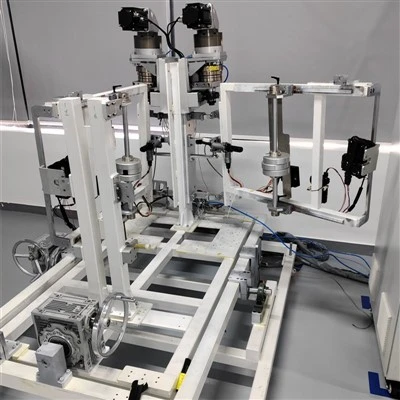
First off, let’s talk about the unsung hero of any performance test: the test load generators’ power accessories. Wait, hold on—you might be thinking, “Power accessories? Isn’t power just power?” Nope, not when you’re running tests that need consistent, clean voltage, no dips or spikes that could mess up your data. Let’s start with rack-mounted power distribution units (PDUs) specifically designed for performance test labs. Not your average office PDU, either. These have individual circuit monitoring for each outlet, so you can track exactly how much power your load generator, server under test, and network switch are drawing during a 24-hour stress test. If one component’s pulling too much juice mid-test, you’ll catch it before it skews your results. We also sell surge protectors built for industrial-grade test gear—cheap home ones will die after a few power blips, but ours are rated for repeated surges, which are common when load generators fire up all their virtual users at once. Pro tip: Never skip the rack mounting kits for these PDUs. Testing labs are tight on space, so mounting them vertically saves way more room than just setting them on a shelf. I’ve seen teams waste hours rearranging gear because they forgot this, so we include compatible mounting brackets with every PDU order (no extra cost—we hate hidden fees as much as everyone).
Next up, network accessories that actually matter for performance testing. A lot of people grab their everyday office switch and call it a day, but that’s a recipe for garbage test data. Let’s start with tap aggregators (sometimes called network test taps). These little devices plug into your test network and mirror traffic between your server under test and your load generators, so you can capture every single packet without interrupting the test. Why is that better than just using a regular switch? Switches can drop packets during high traffic, especially when you’re simulating 100k+ users. Tap aggregators are passive, so they don’t add any latency to the test path—super critical if you’re testing for real-world network delays. We also sell SFP+ transceivers tailored for performance test setups. A lot of load generators and test servers use generic SFPs, but generic ones might not support the full bandwidth you need for high-volume traffic capture. Our transceivers are tested to work seamlessly with our load test gear, so you don’t run into weird compatibility issues mid-test. One more network accessory: cable management kits. I know this sounds stupid, but when you have 20 load generators, each with 10 Ethernet cables running to your test switch, cable clutter causes all kinds of problems. It makes it hard to trace a broken connection, and loose cables can accidentally get pulled out during a lab move, ruining a day of testing. Our cable management clips, Velcro ties, and labeled cable sleeves are designed to fit exactly with our rack gear, so you can keep your setup neat without buying random stuff from a hardware store.
Now, let’s get to the stuff that makes configuring and controlling your performance test gear way less of a headache: control and connectivity accessories. First, KVM switches for test labs. When you’re running 10+ load generators and servers under test, you don’t want to have 10 keyboards, monitors, and mice cluttering your lab. Our KVM switches let you control up to 16 devices from a single monitor, keyboard, and mouse, and they work with all our test equipment. We also sell remote management adapters for load generators—so if your test lab is in another room, or even another city, you can reboot a test machine, check its status, or push new test scripts without being there. This is a game-changer for teams that run overnight stress tests; if a load generator freezes, you don’t have to drive to the office at 2 a.m. to fix it. Another big one: script sync modules. If you’re running a distributed load test (like simulating users in different regions), you need all your load generators to start sending traffic at exactly the same time. Our script sync modules make that dead simple—no more off-by-a-few-seconds delays that make your results unreliable. A lot of cheaper load test gear skips this accessory, so you end up with wonky data that makes your engineering team scratch their heads for hours.
Wait, we can’t forget about data capture and analysis accessories, right? Because what’s the point of running a test if you can’t accurately capture the data? Let’s start with packet capture modules tailored for performance test load generators. Our load generators have slots for these modules, which let you capture every single packet sent and received during a test, directly on the load generator. That means you don’t have to run extra software on a separate server to capture data, which adds less overhead to your test. We also sell TAP-to-server adapters, so if you want to feed captured network traffic straight into your analysis tools, you don’t have to fiddle with wiring. One of our most underrated accessories is the data logging expansion cards for load test controllers. The base controller logs basic metrics, but if you want to track things like disk I/O on the server under test, memory usage per virtual user, or network latency across multiple regions, you need the expansion cards to pull that data in real time. These are especially useful for teams that do root cause analysis after a performance failure—like when a new website crashes during a flash sale, you can go back to your logged data and see exactly when and where the bottleneck happened.
Let’s touch on the stuff that keeps your performance test gear running for years, too—maintenance and replacement accessories. No one wants their load generator to die mid-test because a fan went out, right? We sell replacement cooling fans, power supplies, and hard drives specifically for our gear. We test every part to make sure it meets our quality standards, so you don’t have to buy a random fan off Amazon that breaks in a month. We also offer dust filters for our rack-mounted gear—lab environments can be dusty, and dust buildup causes overheating, which shortens the life of your expensive test equipment. The filters are washable and reusable, so they’re a one-time buy that saves you hundreds in replacement costs. Another maintenance accessory: cable testers. Our cable testers are designed to check if your test network cables are working properly, so you can eliminate a bad cable as the cause of a failed test before you dig through hours of log files. I’ve had so many customers come to me saying “our test isn’t working, it’s the load generator!” and it turns out it was a $5 Ethernet cable that had a broken pin. Our testers catch that in 30 seconds.
Wait, let’s talk about something that’s super important for teams with limited lab space: portable performance testing accessories. A lot of smaller teams or startups don’t have a giant dedicated lab, so they need gear they can take to a client site or use in their own office. We sell portable rack mounting kits that let you set up a 4-unit load test rig on a rolling cart, so you can wheel it around, store it in a closet when not in use, or bring it to a client’s office to run tests on their live system. We also sell battery backups specifically for portable test rigs—so if you’re testing in a space with unstable power, you won’t lose your test data or have to restart a multi-hour test. These battery backups charge quickly and last long enough for a full day of testing, which is way better than regular UPS units that are too heavy or bulky to move.
Let’s be real—every team’s performance testing needs are different. A startup testing a new mobile app might only need a small load test rig with basic accessories, while a big enterprise testing a banking system might need a rack full of load generators, tap aggregators, and remote management adapters. That’s why we don’t just sell accessories—we help you build the exact setup you need, no upselling stuff you’ll never use. For example, if you’re just getting started with performance testing and only need to run tests in your office, we won’t push a portable rack kit you don’t need. If you’re running distributed tests across three regions, we’ll make sure you have the right SFP+ transceivers and script sync modules to make that work.
At the end of the day, accessories aren’t just add-ons—they’re what turn a performance testing setup that gives you bad data into one that gives you reliable, actionable results. Whether you’re a QA lead prepping for a product launch, a DevOps engineer testing a CI/CD pipeline, or a consultant running load tests for a client, the right accessories eliminate the headaches, the downtime, and the guesswork that come with performance testing.

If you’re putting together a performance testing setup and want to make sure you have all the right gear, or you’re running into issues with your current accessories, reach out to our team to chat through your needs. We don’t do generic sales pitches—we work with you to pick exactly what you need, no extra fluff, no hidden costs. We’re here to help make your performance tests run smoother, so you can focus on what matters: building great products that work for your users.
Conveyor Systems References
- Kanoun, K., & Kaâniche, M. (2005). Performance Testing of Distributed Systems: Methodologies and Tools. John Wiley & Sons.
- Jain, R. (1991). The Art of Computer Systems Performance Analysis: Techniques for Experimental Design, Measurement, Simulation, and Modeling. John Wiley & Sons.
- Mueller, S. (2017). TCP/IP Illustrated, Volume 1: The Protocols (2nd ed.). Addison-Wesley.
Ningbo Autino Automation Equipment Co., Ltd.
As one of the most professional performance testing equipment manufacturers and suppliers in China, we also support customized service. We warmly welcome you to buy advanced performance testing equipment from our factory. If you have any enquiry about quotation, please feel free to email us.
Address: No.555 Beichuan Road, Jiangbei District, Ningbo City, Zhejiang Province, P.R. China
E-mail: sales@autino.cn
WebSite: https://www.autinotech.com/
