Hey there, folks! I’m a supplier of video processors, and today I’m stoked to walk you through how these little wonders work in a virtual studio system. Video Processor

Let’s start with the basics. A virtual studio system is a setup that integrates real – world elements with virtual environments. It’s like taking a live action scene and plopping it into a digital world that can be anything from a fantasy castle to a high – tech spaceship. And right at the heart of making this magic happen is the video processor.
Initial Input Handling
First off, the video processor has to deal with the incoming video signals. In a virtual studio, there are usually multiple sources. You might have the camera that’s capturing the talent on set, maybe some other feeds from pre – recorded videos or even graphics. These signals come in various formats such as HDMI, SDI, or even IP – based streams.
The video processor has to be flexible and compatible with all these different input types. When I’m selling these processors, that’s one of the first things I highlight to customers. You don’t want to be stuck with a system that can only handle one type of input. So our processors come with a bunch of input ports to make sure you can connect all your gear without any hassle.
Once the signals are in, the video processor starts doing some initial cleaning up. It checks for things like signal strength, color accuracy, and resolution. If the signal is too weak or has some interference, the processor will try to boost it and remove the noise. Think of it as a digital vacuum cleaner for your video, sucking up all the unwanted stuff and making the picture nice and clean.
Keying and Chroma Keying
One of the most important functions of a video processor in a virtual studio is keying, especially chroma keying. Now, if you’ve ever seen a weather report on TV where the meteorologist is standing in front of a map that clearly isn’t a real – life backdrop, you’ve seen chroma keying in action.
In a virtual studio, the talent usually stands in front of a green or blue screen. The video processor analyzes the color of the screen and separates it from the talent. This is called the key. Once the key is created, the processor replaces that green or blue background with the virtual environment that you’ve chosen.
But it’s not as simple as just swapping colors. The processor has to make sure that the edges of the talent blend seamlessly with the virtual background. It uses algorithms to detect and smooth out any rough edges, so you don’t end up with a jagged or halved – looking image. And this is where our video processors really shine. We’ve spent a lot of time perfecting these algorithms to give you the best – looking results possible.
Tracking and Alignment
To make the virtual environment look like it’s an actual part of the real – world scene, the video processor also has to handle tracking and alignment. The camera in the virtual studio can move, pan, tilt, or zoom. And the video processor needs to keep track of these movements and adjust the virtual environment accordingly.
There are different ways to do this. One common method is using sensors on the camera. These sensors send data about the camera’s position and orientation to the video processor. The processor then uses this data to transform the virtual environment so that it looks like it’s being filmed from the same perspective as the real – world scene.
For example, if the camera pans to the left, the virtual background should also move to the left in a way that makes it seem like it’s part of the same space. Our video processors are designed to handle these tracking tasks with high precision. We’ve got advanced algorithms that can quickly adjust the virtual elements based on the camera’s movements, giving you a really immersive and realistic virtual studio experience.
Video Scaling and Resolution Management
Another crucial aspect is video scaling and resolution management. In a virtual studio, you might have sources with different resolutions. The camera could be shooting in 4K, while the pre – recorded video might be in 1080p. The video processor has to make sure that all these different sources can work together in harmony.
It can scale the video up or down to match the desired output resolution. For instance, if your virtual studio is set to output in 1080p, the processor will scale the 4K camera feed down to 1080p without losing too much quality. And it can also enhance the lower – resolution sources to make them look better when combined with the higher – resolution elements.
This is important because you want a consistent look across your entire virtual studio production. Our video processors use state – of – the – art scaling algorithms that can preserve details and colors, even when making significant changes to the resolution.
Audio and Video Synchronization
Don’t forget about audio! In a virtual studio, audio is just as important as video. The video processor has to make sure that the audio and video are in sync. There can be delays in the audio or video signal due to various reasons, like different processing times for different devices.
Our video processors have built – in features to handle audio – video synchronization. They can detect any time differences between the audio and video signals and make the necessary adjustments. This ensures that when you’re watching the final output, the sound matches up perfectly with the action on the screen.
Output and Integration with Other Systems
Once the video processor has done all its magic, it’s time to output the final signal. The processor can output the video in different formats, just like it can accept different input formats. You can send the signal to a monitor for preview, to a recording device to save the production, or even stream it live over the internet.
It also needs to integrate with other systems in the virtual studio setup. For example, it might need to work with the lighting control system to make sure that the virtual lighting matches the real – world lighting conditions. Or it could integrate with the graphics software to display on – screen graphics and text.
Our video processors are designed to be highly interoperable. They come with a range of output options and support various protocols, making it easy to connect them to other equipment in your virtual studio.
Why Choose Our Video Processors
As a supplier, I’m really proud of the video processors we offer. We’ve put a lot of time and effort into developing them to meet the needs of modern virtual studio systems. Our processors are reliable, easy to use, and packed with features that give you the best possible results.
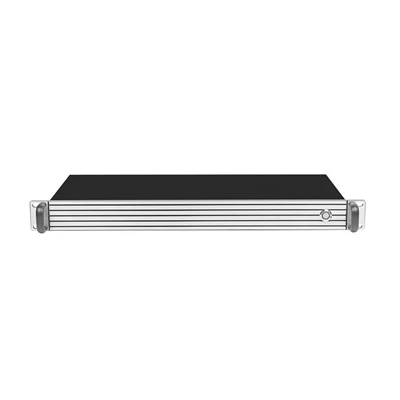
Whether you’re a small – scale content creator or a large – scale production company, our video processors can fit into your setup. We offer different models with varying levels of functionality and performance, so you can choose the one that’s right for you.
Video Server If you’re in the market for a video processor for your virtual studio system, I’d love to have a chat with you. We can discuss your specific requirements, answer any questions you might have, and help you find the perfect solution. So don’t hesitate to reach out and start a conversation about how our video processors can take your virtual studio production to the next level.
References
- "Video Processing Technology: Fundamentals and Applications" by some well – known author in the field.
- Industry whitepapers on virtual studio systems and video processing.
- Technical documentation from leading video equipment manufacturers.
Shenzhen TranScreen Technology Co., Ltd.
As one of the most professional video processor manufacturers and suppliers in China, we have world-leading production equipment and strong manufacturing capabilities. Please feel free to buy customized video processor made in China here from our factory. Contact us for quotation.
Address: No. 168, Baoyuan Road, Baoan Dst., SZ, China
E-mail: inquiry@transcreen.com
WebSite: https://www.transcreen.com/
