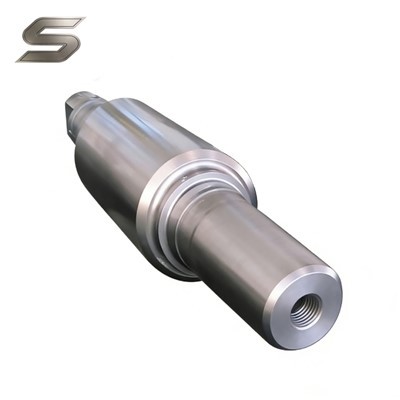
Can brass precision forgings be customized? This is a question that many customers often ask me as a supplier of brass precision forgings. In this blog, I’ll delve into the world of customizing brass precision forgings, exploring the reasons, processes, challenges, and the benefits it brings. Brass Precision Forgings
Why Customization is in Demand
In today’s highly competitive market, one – size – fits – all solutions rarely meet the diverse needs of different industries. Customized brass precision forgings are in high demand for several reasons.
Firstly, different industries have unique requirements. For example, the automotive industry needs brass forgings with specific mechanical properties to withstand high – stress environments, such as in engine components. These forgings need to have excellent strength, corrosion resistance, and dimensional accuracy. On the other hand, the electronics industry requires brass parts that are highly conductive and can be precisely shaped to fit into compact devices.
Secondly, product innovation drives the need for customization. As companies strive to develop new and improved products, they often need specialized brass forgings that are not available off – the – shelf. Customization allows them to incorporate unique features and designs into their products, giving them a competitive edge in the market.
The Customization Process
The process of customizing brass precision forgings is complex and involves multiple steps.
1. Consultation and Design
The first step is to have in – depth consultations with the customer. We need to understand their exact requirements, such as the purpose of the forging, the mechanical properties needed, and the dimensional specifications. During this phase, our engineering team works closely with the customer to translate their ideas into detailed design drawings. Using advanced CAD software, we can create 3D models of the proposed forgings, which allows the customer to visualize the final product and make any necessary adjustments.
2. Material Selection
Once the design is finalized, the appropriate brass alloy needs to be selected. There are different types of brass alloys, each with its own unique properties. For instance, C36000 brass (also known as free – machining brass) is known for its excellent machinability, making it suitable for parts that require a lot of machining operations. C26000 brass has good corrosion resistance and is often used in applications where exposure to moisture or chemicals is a concern. Our experts consider factors such as strength, ductility, corrosion resistance, and cost when choosing the right alloy for the custom forging.
3. Forging and Manufacturing
After the material selection, the actual forging process begins. We use state – of – the – art forging equipment to shape the brass billets into the desired form. The forging process involves applying high pressure to the heated brass, which helps to improve its mechanical properties by aligning the grain structure. Depending on the complexity of the design, we may use different forging techniques, such as open – die forging, closed – die forging, or precision forging.
During the manufacturing process, strict quality control measures are implemented. We use advanced inspection equipment, such as coordinate measuring machines (CMMs), to ensure that the dimensions of the forgings meet the exact specifications. Non – destructive testing methods, such as ultrasonic testing and magnetic particle testing, are also used to detect any internal defects in the forgings.
4. Finishing and Surface Treatment
Once the forgings are manufactured, they may undergo various finishing operations. This can include machining to achieve the final dimensions and surface finish, heat treatment to improve the hardness and strength, and surface treatment to enhance the corrosion resistance. For example, we can apply electroplating or passivation to the brass forgings to protect them from oxidation and corrosion.
Challenges in Customizing Brass Precision Forgings
While customization offers many benefits, it also comes with its fair share of challenges.
One of the main challenges is maintaining dimensional accuracy. Brass has a certain coefficient of thermal expansion, which means that it can expand or contract during the heating and cooling processes. This can lead to dimensional variations in the forgings. Our team has to use precise temperature control and compensation techniques to minimize these variations.
Another challenge is dealing with complex designs. Some custom brass forgings have intricate geometries that are difficult to forge. In such cases, we may need to use special forging dies and techniques to achieve the desired shape. Additionally, complex designs may require more machining operations, which can increase the manufacturing time and cost.
Cost is also a significant challenge. Customization often involves higher upfront costs due to the need for specialized tooling and design work. However, we work closely with our customers to find cost – effective solutions without compromising on quality. For example, we may suggest alternative materials or manufacturing processes that can reduce the overall cost while still meeting the customer’s requirements.
Benefits of Customized Brass Precision Forgings
Despite the challenges, the benefits of customized brass precision forgings are numerous.
1. Perfect Fit
Customized forgings are designed to fit the specific requirements of the customer’s application. This ensures optimal performance and reduces the risk of component failure. For example, in a hydraulic system, a custom – made brass forging can provide a perfect seal, preventing leaks and improving the overall efficiency of the system.
2. Improved Performance
By selecting the appropriate brass alloy and optimizing the forging process, we can enhance the mechanical properties of the forgings. This can result in improved strength, hardness, and corrosion resistance, which are crucial for applications in harsh environments.
3. Competitive Advantage
For companies that use customized brass forgings in their products, it gives them a competitive edge in the market. They can offer unique and innovative products that stand out from their competitors. This can help to increase customer satisfaction and market share.
Contact Us for Custom Brass Precision Forgings

If you are in need of customized brass precision forgings, we are here to help. Our experienced team of engineers and technicians can work with you to understand your requirements and develop high – quality custom solutions. Whether you are in the automotive, electronics, or any other industry, we have the expertise and capabilities to meet your needs.
Brass Investment Castings Don’t hesitate to reach out to us for a consultation and to discuss your custom forging project. We look forward to working with you to create the perfect brass precision forgings for your application.
References
- "Brass Alloys: Properties, Processing, and Applications" by John Doe, published by Metal Press, 20XX.
- "Precision Forging Technology" by Jane Smith, published by Manufacturing Publications, 20XX.
Hebei Shata Machinery Co., Ltd.
As one of the most experienced brass precision forgings manufacturers and suppliers in China, we have advanced foundry technique and professional production team. Welcome to buy high-grade brass precision forgings for sale here from our factory. All custom made products are with high quality and competitive price.
Address: No.11 Cangshun Rd., Shijiazhuang, Hebei, China
E-mail: Info@shatamachinery.com
WebSite: https://www.shatamachinery.com/
