Hey there! I’m a supplier of custom turned parts. Over the years, I’ve gotten tons of questions from clients about what the quality standards for custom turned parts actually are. So, I thought I’d sit down and write this blog to share my insights on this topic. Custom Turned Parts
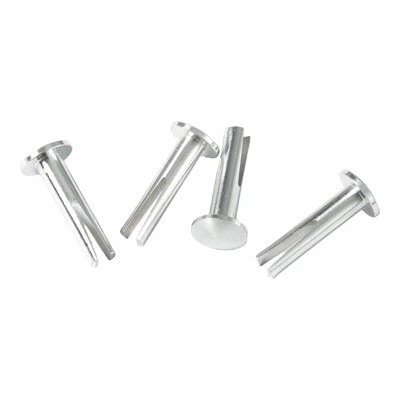
First off, let’s talk about materials. The quality of the custom turned parts starts with the materials we use. We can’t just pick any old stuff. For example, if you’re looking for parts that need to be corrosion – resistant, we’ll usually go with stainless steel. It’s got that amazing quality to withstand rust and other forms of corrosion, which is super important in industries like marine or food processing.
On the other hand, if you need parts that are lightweight but still strong, aluminum might be the way to go. It’s widely used in the aerospace industry because it helps to reduce the overall weight of the aircraft without sacrificing too much on strength.
We’ve also got brass. It’s great for electrical applications because it’s an excellent conductor of electricity. And it has a nice finish too, which can be a plus for some products where aesthetics matter.
The key here is to make sure that the material we choose matches the specific requirements of the custom turned parts. We source our materials from reliable suppliers who meet strict industry standards. We always check the material certificates to ensure that we’re getting the real deal. If there’s any doubt about the quality of the materials, we won’t use them.
Next up is dimensional accuracy. This is a biggie. Imagine if you’re making a part for a complex machine, and the dimensions are off by even a tiny bit. It could cause the whole machine to malfunction.
We use high – precision machining equipment to ensure that the parts we make are as close to the design specifications as possible. Our machines can work with extremely tight tolerances. For example, in some cases, we can achieve tolerances of ±0.005 mm. That’s like a hair’s breadth!
To make sure we’re hitting those targets, we use a variety of measurement tools. Caliper is one of the most common ones. It’s a simple yet effective tool that can measure the diameter, length, and thickness of the parts with a high degree of accuracy. We also have micrometers for even more precise measurements.
Apart from that, we do in – process inspections. We don’t just make the parts and then check them at the end. We check them at different stages of the manufacturing process. That way, if we find any issues with the dimensions, we can fix them right away instead of having to scrap a whole batch of parts.
Surface finish is another important quality standard. The surface finish of the custom turned parts can have a big impact on their performance and appearance. If the surface is too rough, it can cause increased friction, which might lead to premature wear and tear of the parts.
For some parts, a smooth surface finish is required for functional reasons. For example, parts used in hydraulic systems need to have a very smooth surface to prevent leaks. On the other hand, for parts that are on display, a good surface finish can enhance the overall look of the product.
We have different methods to achieve the desired surface finish. One common method is polishing. We can use different grades of abrasive materials to polish the parts to the right smoothness level. We also have deburring processes, which are used to remove any sharp edges or burrs that might be left after the machining process.
Heat treatment is also an essential aspect of the quality standards for custom turned parts. Depending on the material and the application of the parts, heat treatment can be used to improve the mechanical properties such as hardness, strength, and toughness.
For example, if we’re making parts from steel, we might use quenching and tempering processes. Quenching involves heating the steel to a high temperature and then rapidly cooling it. This makes the steel very hard. But it can also make it brittle. That’s where tempering comes in. Tempering is a process of reheating the quenched steel to a lower temperature to reduce its brittleness while still maintaining a good level of hardness.
Some other heat treatment processes we use include annealing. Annealing is used to make the material softer and more ductile. This is useful when we need to perform further machining operations on the parts.
In – house testing and quality control are the backbone of our manufacturing process. We have a dedicated quality control team that’s responsible for making sure that every custom turned part we produce meets the quality standards.
We start with the raw materials. As I mentioned earlier, we check the material certificates. But we also do some in – house tests, like hardness tests. This helps us to confirm the quality and properties of the materials before we start machining them.
During the machining process, we do continuous inspections. We check the dimensions, surface finish, and other important parameters at regular intervals. If any part doesn’t meet the standards, we take immediate action. It could be adjusting the machining parameters or reworking the part.
Once the parts are finished, we do a final inspection. We use a combination of visual inspection and more advanced testing methods. For example, we might use ultrasonic testing to detect any internal defects in the parts.
Documentation is also crucial. We keep detailed records of every part we make, including the manufacturing process, inspection results, and any quality – related issues. This documentation not only helps us to keep track of the quality of our products but also provides our clients with the assurance that the parts they’re getting are of high quality.
At the end of the day, the quality standards for custom turned parts are all about meeting the specific needs of our clients. Every client has different requirements, and it’s our job to make sure that we can deliver parts that not only meet but exceed those expectations.
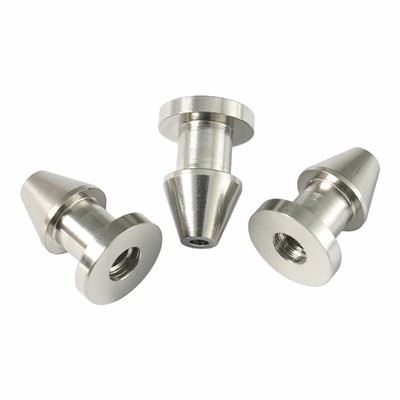
If you’re in the market for custom turned parts and want to learn more about how we can meet your quality standards, don’t hesitate to reach out and start a procurement discussion. We’re here to work with you to get the best possible parts for your applications.
Carbon Steel Turned Parts References
- "Handbook of Machining and Metalworking Calculations"
- "Manufacturing Engineering and Technology"
- Industry whitepapers on custom turned parts quality control
Huizhou Quanyi Precision Hardware Products Co., Ltd.
Address: Building A10, 7th Floor, Zhongchuangyingke 5G Industrial Park, Zhonghan Industrial Park, Tonghu Town, Huizhou City
E-mail: info@qycncturning.com
WebSite: https://www.qycncturning.com/
